Showing posts with label David Lean. Show all posts

Tuesday, August 15, 2023

1984: Best Adapted Screenplay

Even as a child, I fantasized about winning this category, so imagine getting to discuss a lineup like this, all killer, no filler, and the winner is none other than a man whose plays I inhaled throughout high school:


Find copies of these screenplays. They are great samples of setting, characterization, action, dialogue. They are all readily available, as they've all gone on to be held up and taught as how to write a screenplay. Gosh, I love them all.

The nominees:

Sunday, August 13, 2023

1984: Best Director

Miloš Forman's Oscar win for Best Director was inevitable. Before that ceremony, he had already been named Best Director by the Hollywood Foreign Press, the Los Angeles Film Critics Association, and the Directors Guild of America. The only competitive film award he lost was BAFTA, and that may be because Amadeus was a 1985 release - he had to wait a whole year, by which time new and shiny films had come along (oddly, too,, it's the only year where directors did not have their own category but shared the Best Film award and nomination with their producers). But for the 1984 film year, Forman's Oscar was a shoo-in:


A past winner himself, he was up against a first-timer and three other past winners. These folks, in fact:

Monday, October 24, 2022

1946: Screenplay

We're getting to the end of 1946! This is the third writing category, this one honoring works adapted from other works. You notice I don't say other mediums: that's because one of the nominees is not from a short story or play or novel, but from an Original Motion Picture Story. That is to say, it was always meant for the cinema, just that the credited screenwriters weren't all necessarily the original conceivers of the tale. We've covered the distinction before, you get it by now.

The nominees: 

Monday, October 17, 2022

1946: Director

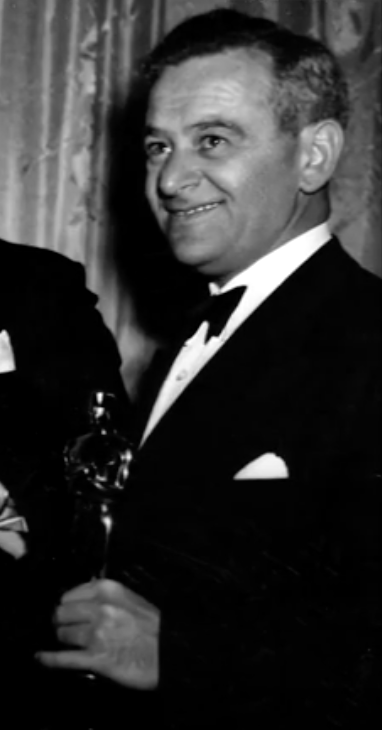
The 1946 Best Director lineup is made up of two first-timers...and three sixth-timers! There's Clarence Brown, who this year officially became the record-holder in this category for Most Nominations Without A Win. There's Frank Capra, whose five previous nods resulted in three wins! And there's William Wyler, who won his first Oscar four years previously, his third 13 years later, and his second...well, this was his second!


Do we agree with that win? Should it have gone to one of the other sixth-timers? Or another nominee entirely? Let's talk...

Friday, December 10, 2021

The Winners of the 1962 Retro Hollmann Awards

Wrapping things up with the winners of the 1962 Retro Hollmann Awards. Make sure you refer back to the nominations for full context, as well as the Top Ten for further insight.

Let us begin:

Best Ensemble
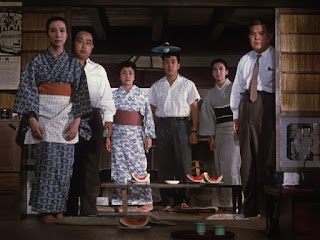
The End of Summer
2. Long Day's Journey Into Night; 3. The Connection; 4. Billy Budd; 5. Victim

Every character, no matter how brief their turn, is perfectly performed. Not just the sisters and their father, but the aunt who shows up in two scenes, the mistress's daughter and her American boyfriend, the potential suitor, the woman who runs the bar, the two farmers at the end: all of them have their own stories happening off-screen, and the glimpse we get makes them just as compelling as our leads.

The remaining 17 categories after the jump...

Monday, October 18, 2021

Cinema '62: Best Director

Although we've seen this before, rare indeed is the Best Director lineup where the majority of nominees are representing films not nominated for Best Picture. Indeed, I believe since the category went five-wide in 1936, three lone directors have only occurred five times: 1954, 1955, 1962, 1963, 1966. Curious that they're all within a 12-year span, coinciding with the winnowing-away of the Hays Code and the growing appreciation for international cinema. 

The lone directing nominees here represent David and Lisa, a drama about youths in a residential home for mental health issues; Divorce Italian Style, an Italian comedy about a man who plots the death of his wife so he can seduce his teenage cousin; and The Miracle Worker, a surprise Best Picture snub, about Anne Sullivan teaching Helen Keller how to communicate. The directors "snubbed" are The Longest Day's triumvirate of Ken Annakin, Andrew Marton, and Bernhard Wicki (with significant though uncredited contributions from Gerd Oswald and Darryl F. Zanuck); The Music Man's Morton DaCosta; and Mutiny on the Bounty's Lewis Milestone (with uncredited filming from Carol Reed, who was fired mid-production). Here's who made it:

Monday, November 20, 2017

Christmas Miracles, Anti-Semitic Crimes: Screenplay, 1947

Here we have the nominees for Best Screenplay, separate from Original Screenplay and Motion Picture Story for reasons we covered in our post on the latter.

Four of the five nominees for Best Picture are represented here: Crossfire, written by one-time nominee John Paxton, and covering similar thematic ground as Gentleman's Agreement, written by Tony-winner/Pulitzer Prize winner/two-time Oscar nominee Moss Hart. There's Great Expectations, adapted by director David Lean (his third of eleven nominations), former cinematographer Ronald Neame (his third of three nominations), and producer Anthony Havelock-Allan (his second of three nominations). The family-friendly comedy Miracle on 34th Street is here, the only original work, whose source material was a Motion Picture story; director George Seaton wrote the screenplay, received his second of five nominations....and won his first of two Oscars!


The outlier - and outlier it indeed is - is Boomerang!, adapted from a Reader's Digest article by Richard Murphy, who would later be nominated for Story and Screenplay for The Desert Rats. Unlike its competitors, it was not nominated anywhere else, and personally, I feel the only thing that keeps it relevant and available today isn't its nomination, but its status as an Elia Kazan picture. That's just me, though.

Let's talk turkey, shall we? After the jump, of course...

Sunday, November 19, 2017

Enter Kazan: Director, 1947

Today, we take a look at Best Director. By now, you should be somewhat familiar with the films involved: the actor-goes-nuts drama A Double Life, the anti-anti-Semitism polemic Gentleman's Agreement, its B-picture equivalent Crossfire. The only ones we have not gone into detail about so far are The Bishop's Wife, in which an angel comes to Earth to help a disillusioned bishop and his wife, and Great Expectations, which I assume most of us know from our Dickens. If you don't, it's about a poor boy who becomes a well-off young man thanks to a mysterious benefactor; the most famous element is a wealthy woman forever encased in the wedding dress she wore when she was jilted many many many years ago.

The nominees should be familiar to us all. George Cukor was a favorite of Katharine Hepburn's and was one of the initial directors of Gone with the WindA Double Life was his third of five nominations, and he eventually won for My Fair Lady. Edward Dmytryk helmed many a noir, but this would be his first and only nod; better known is his status as one of the original Hollywood Ten held in contempt of Congress during the red scare, who saved himself from the Blacklist by later naming names. Elia Kazan received his first nomination for his fourth film - and won!


He went on to four more Best Director nods, one of which resulted in a second win, but more importantly, he became known as one of the great directors of the 1950s - and, yes, all time. He was unapologetic about naming names to the House Un-American Activities Committee, something that caused a bit of a rift in the audience of the 71st Academy Awards, where he received an Honorary Oscar.

Henry Koster did great and acclaimed films like Harvey, My Cousin RachelThe Robe, Flower Drum Song...those all came after his nomination for The Bishop's Wife, his first and only. And David Lean would become known for his epics, winning Oscars for The Bridge on the River Kwai and Lawrence of Arabia. In all, he received eleven Academy Award nominations.

But let's talk about their work in these movies. Let's do that after the jump.

Tuesday, September 15, 2015

Cinema '65: The Man from Tokyo

What a wacky year, this 1965! 

David Lean, according to Behind Oscar, was shocked to learn that he was among the five Academy Award nominees for Best Director -- for the Directors Guild had not included him in their end-of-year honors! That's just crazy -- how does an Oscar-winning filmmaker not get some traction for helming yet another box office hit?

Actually, the DGA nominees were, altogether, an odd bunch. Regard: the only men to make it in both shortlists were John Schlesinger (with whom we fell in love thanks to Sunday Bloody Sunday) for the very modern Darling, and Robert Wise for his family-friendly musical The Sound of Music.

Can you imagine an alternate reality where it's Sidney J. Furie and his fascinating spy thriller The Ipcress File that go down in Oscar History? What about Elliot Silverstein for the comedy-western Cat Ballou? I am surprised The Pawnbroker's Sidney Lumet did not make it in -- he was previously nominated for 12 Angry Men, after all, and the film had caused quite a stir.

At the Golden Globes, Lean, Schlesinger, and Wise were joined by beloved industry titan William Wyler, whose The Collector had netted acting honors for both leads at the Cannes Film Festival. This foursome would repeat here. A Patch of Blue director Guy Green would not be as fortunate, but hey -- he got to say he was a Golden Globe nominee.

No, instead of Furie, Silverstein, Lumet, or Green -- instead of even Stanley Kramer or Fred Coe, whose respective films, Ship of Fools and A Thousand Clowns, were both up for Best Picture -- the Directors Branch made a shocking pick with Hiroshi Teshigahara, the Japanese filmmaker behind Woman in the Dunes, an avant-garde slow-burn that must be seen to be believed.

And what do we make of this line-up? Behold, after the jump.